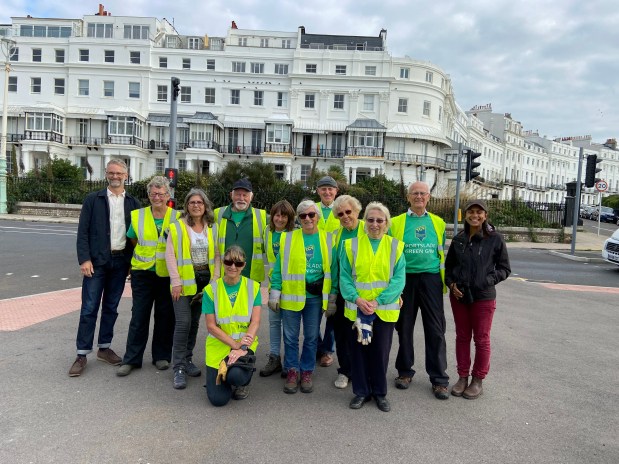
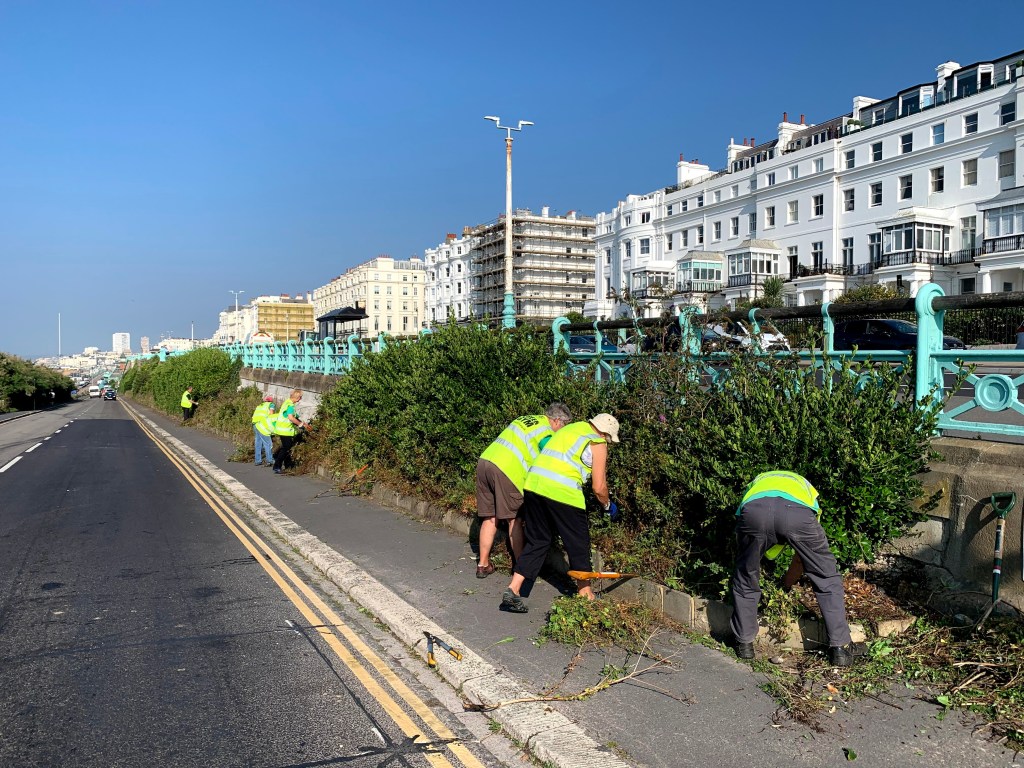
Sadly it is the end of an era. Portslade Green Gym – the wonderful group of volunteers who have been managing Madeira Drive Green Wall for us for so many years, has closed.
It is very hard to maintain a voluntary group these days. The Green Gymers haven’t been getting any younger – and have found it hard to recruit new members.
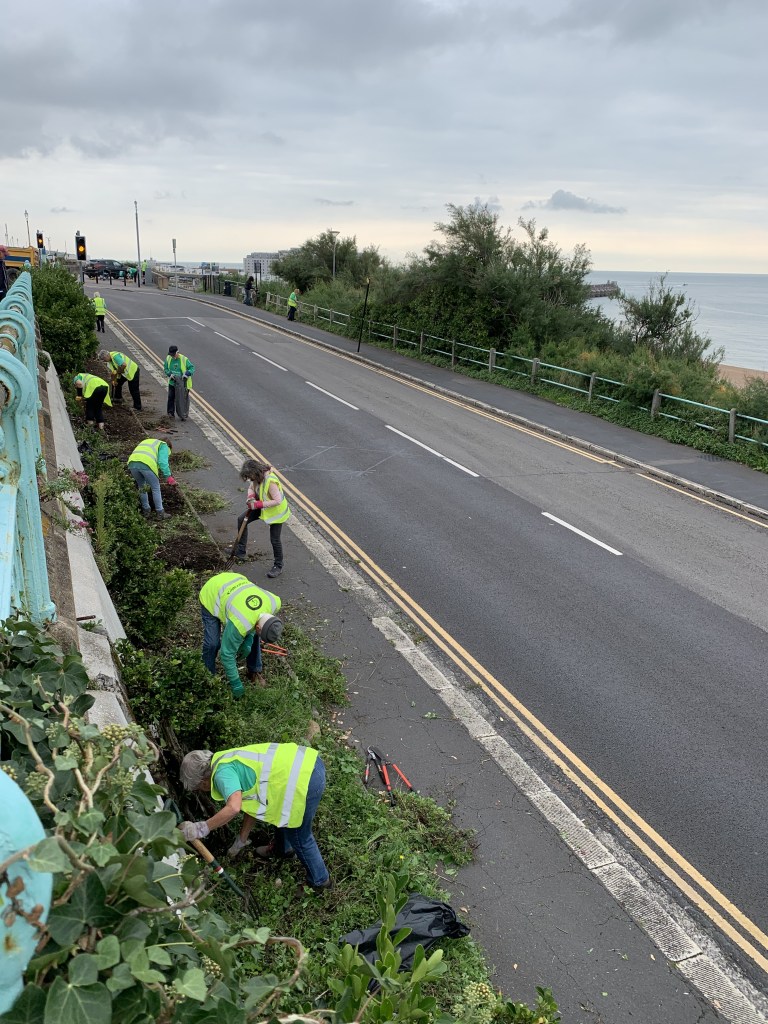
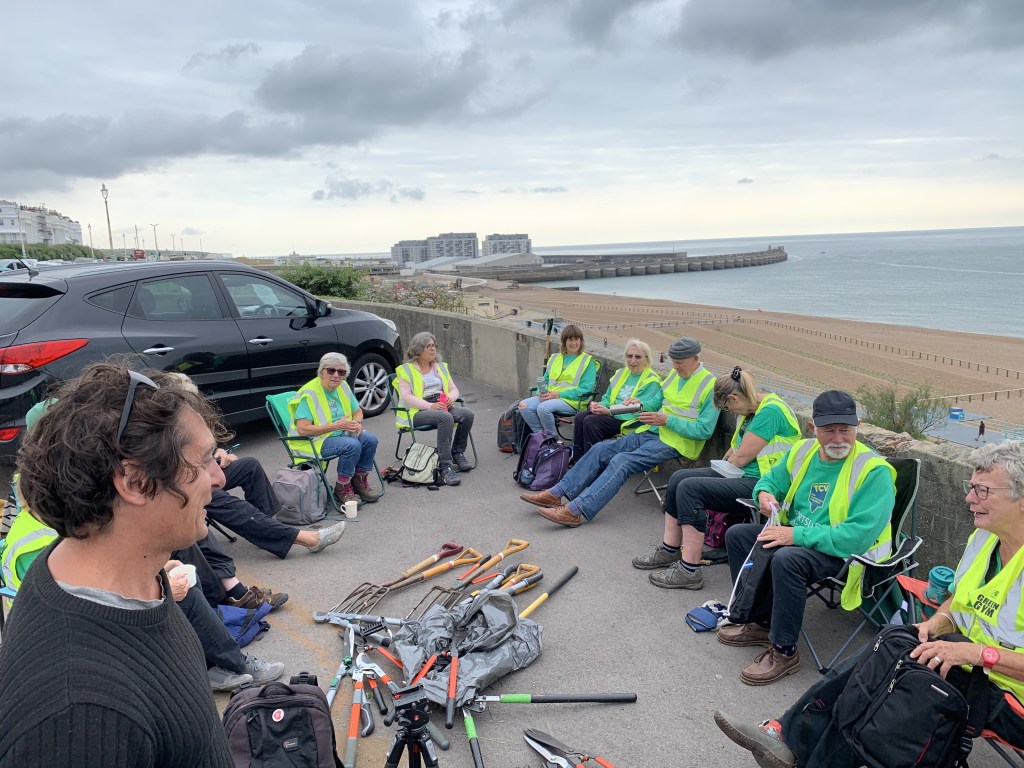
Such a shame, given how important social contact and exercise is for older people – and how much they have contributed to the Maderia Drive and other sites across Brighton & Hove. They have visited once or twice a year since 2016 – a decade of hard work to keep down troublesome plants, nurture the baby spindle trees planted by us, and litter pick.
Here they are on film in 2022 for LatestTV.
Thank you to all the wonderful volunteers who have helped over the years. You shall be missed.
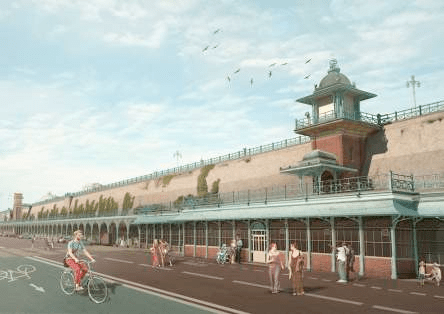
Today, 18 November, is a momentous day in the history of east Brighton. For finally, after a decade of closure, work begins to restore a section of Madeira Terrace.
According the Council news release, “Work to restore the first 28 arches and build a new, fully accessible lift is expected to be completed in summer 2026. An important part of the renovation of Madeira Terrace is improving biodiversity and revitalising the Green Wall, which has grown along the East Cliff wall for more than 150 years, predating the Terrace itself. During 2022 /23, expert surveys of the plants forming the Green Wall were conducted to help us understand more about their health and how best to ensure that there is a thriving Green Wall is again after the renovation. Those surveys revealed that all the plants have rooted into the wall at various points, which has allowed them to grow so tall. These plants now get most of their nutrients and water from the wall through their aerial roots, rather than from the ground through their main stems. As a result of this it is unfortunately not possible to retain the majority of the existing spindle plants, given the works that are needed to the wall.”
For us at Building Green, it’s always a sad day to see biodiversity loss, especially at a site where the planting is over 150 years old.
Building Green, with partners, But we recognise the need to ensure the supporting wall is safe and sound, and we note the Council’s commitment to fully restore and enhance the green wall.
“The detailed plans have been carefully developed with conservation specialists and with input from the Advisory Panel. They will lead to the Green Wall becoming more biodiverse and greener when the work is completed. It will cover far more of the cliff wall than it currently does. However, it will take time to achieve this and the first step towards a restored Terrace is to remove the majority of the existing vegetation. This is necessary so that essential engineering works can be carried out to the face of the A259 retaining wall, which also supports the Terrace. The new climbers and planting will need to establish and have time to grow up the wall. The planting works are the last stage of the project, and I’m looking forward to seeing the results when we are once more be able to enjoy this iconic piece of our heritage in 2026“.
Councillor Jacob Taylor, Deputy Leader and Cabinet member for Finance and City Regeneration
The Council continue: “One of the first operations the contractor will do is to remove the vegetation. It is only after this that the challenging task of dismantling the structure can get underway. This will be followed by breaking out of the concrete deck. It is the deterioration of the deck that was one of the main reasons the Terrace was closed to the public.
To enable the deck to be dismantled safely the Royal Crescent Steps will be temporarily closed for about one week in early December. Notices of the closure will be put up at the top and bottom of the steps to provide advanced notice of the exact dates. Alternative access points at Duke’s Mound and the Colonnades will remain open throughout the works.
The parking bays between the Royal Crescent Steps and Concorde 2/Madeira Shelter Hall will also be removed and won’t re-open until the Terrace opens in summer 2026, but we will announce alternative provision next month. The bays to the east and west of this area will remain available.”
We expect to receive responses in February 2024 and, subject to receiving satisfactory bids within the budget, will appoint the contractors in spring.
As well as restoring 28 arches and bays, subject to acceptable bids we expect that Phase 1 will also include:
A new lift – a key component for the scheme that will ensure access for all
Full replacement of the upper deck with a waterproofed deck, infrastructure for canopies / shades and for pop-up events
Painting with a system guaranteed to perform better in coastal conditions than traditional materials available to the Victorians
Refacing and regreening the Green Wall where possible, although much of this will take time to recolonise as the current wall has been there for 150 years and is older than the Terrace itself
A new staircase down from the deck next to Concorde 2 / Shelter Hall
Reinstatement of the planted verges at Madeira Drive level
A more pedestrian friendly layout in front of the Terrace, providing beach access for all, and Seating to the upper and lower decks encouraging people to sit and enjoy the views
Members of Building Green have worked with the Council and partners for more than a decade to reach this point. We feel that the green wall is now firmly established in the vision for Madeira Drive – and look forward to seeing who comes forwards to make this vision a reality.
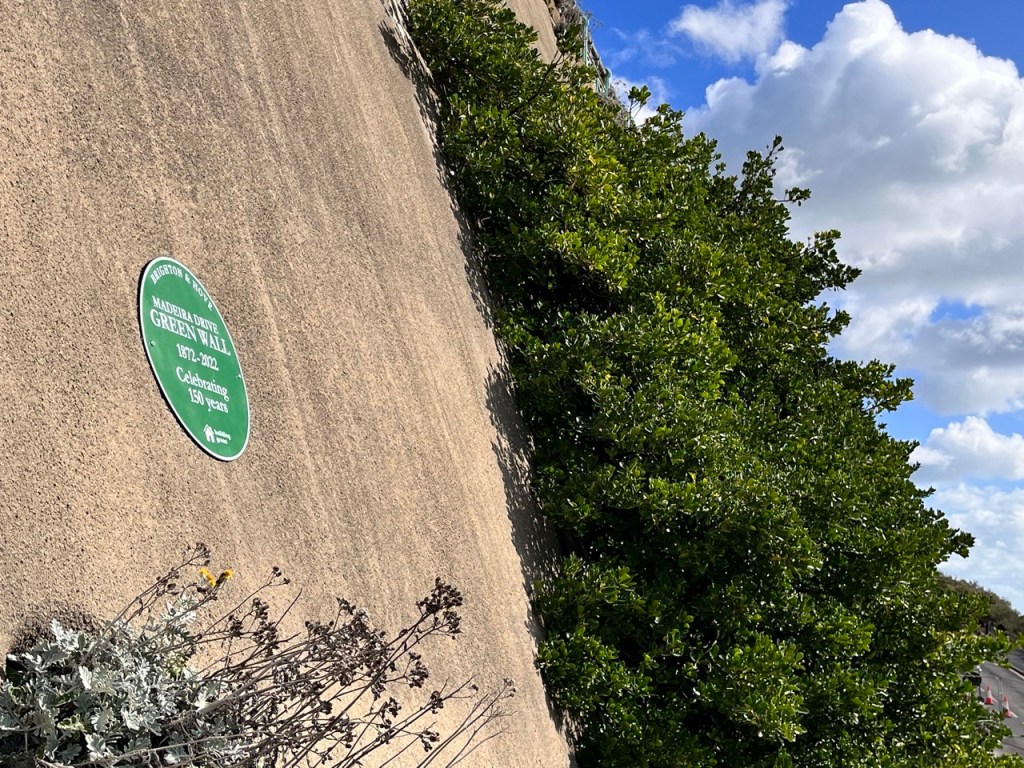
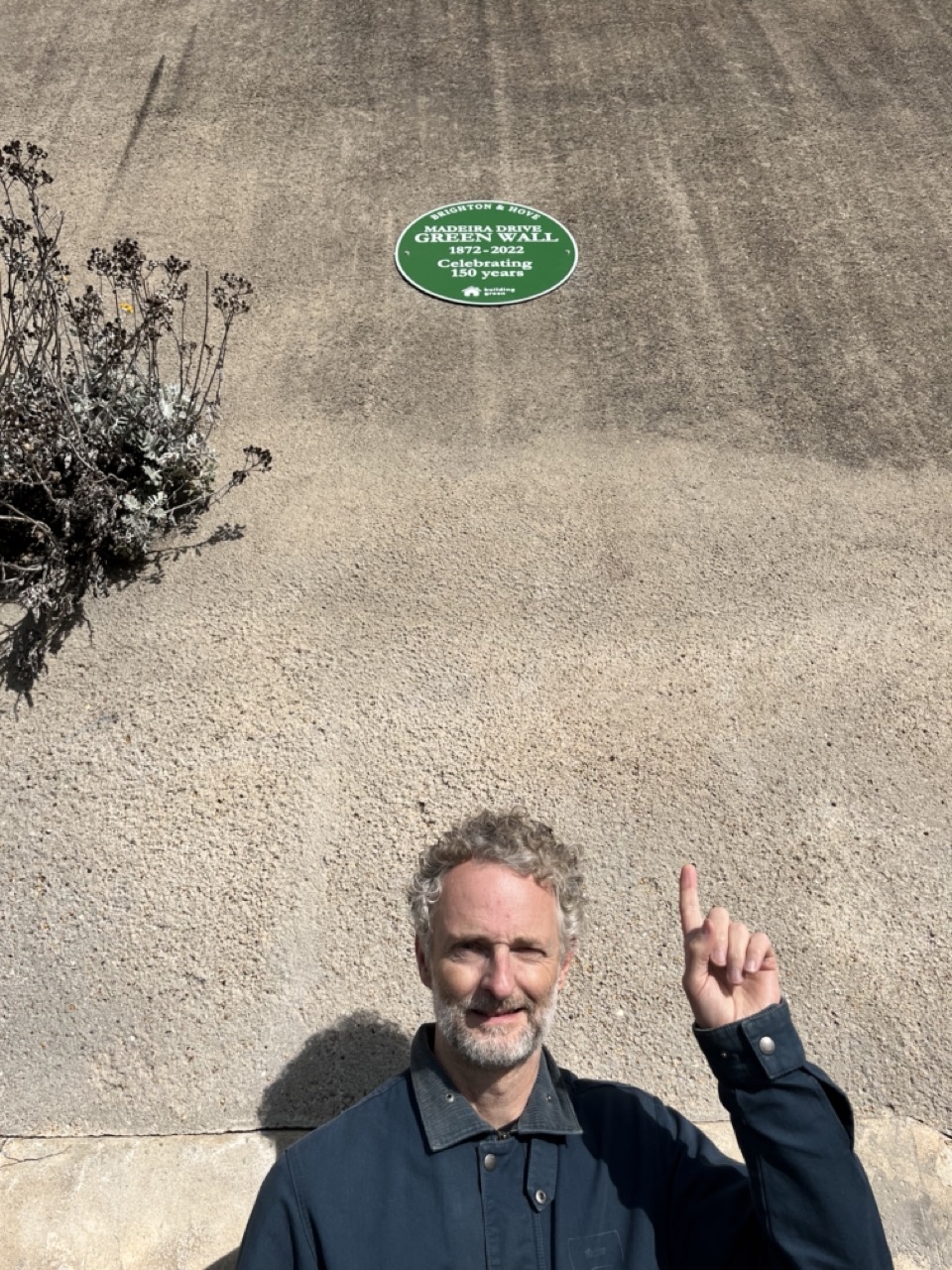
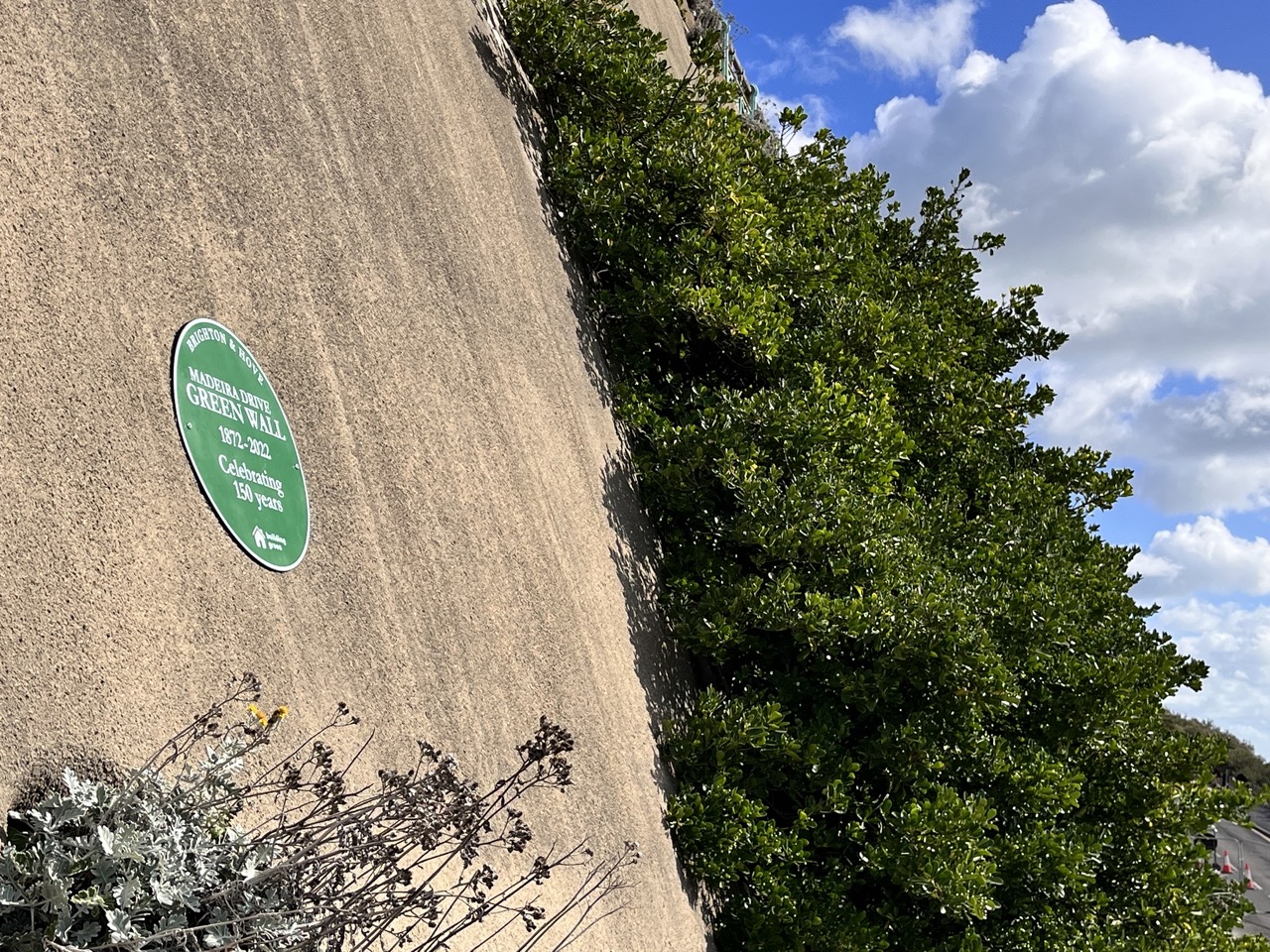
A ‘green plaque’ has been installed at Duke’s Mound, Brighton & Hove, to mark the 150th year of the Madeira Drive Green Wall.
Originally planted in 1872, this is the longest and oldest green wall in the country. And the first ‘green plaque’ of its kind.
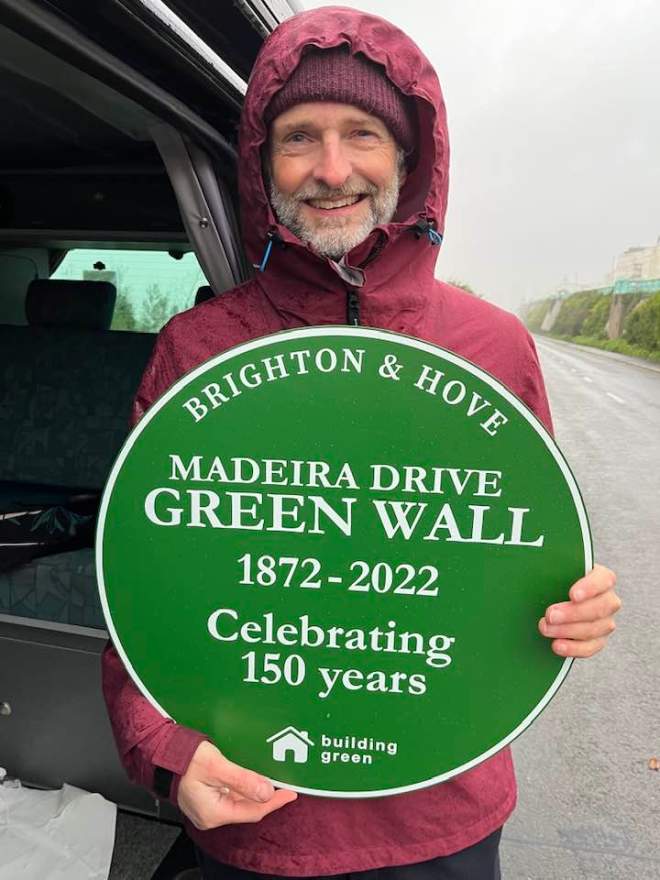
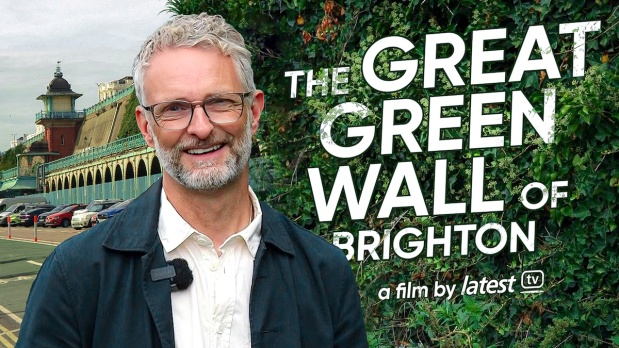
Building Green Founder James Farrell (pictured) said ‘The idea behind the Green Plaque is to celebrate places of historic importance for people and nature. Modelled on English Heritage’s ‘Blue Plaque’ for famous residencies, the plaque installed at Duke’s Mound recognises the unique contribution Victorian’s made to the city seafront – and the pioneering example of bringing nature, recreation and heritage together that was recently featured in the film ‘The Great Green Wall of Brighton.’
With thanks to Brighton & Hove City Council, Harrity Building & Construction and Standard8.
The programme runs from 10-24 April online, and features many fabulous offerings from first time filmmakers. We are in ‘Programme 1’.
Our film celebrates the role nature plays in the health and well-being of towns and cities, with a focus on the unique features of Brighton & Hove.
It includes stunning new footage from filmmaker William Ranieri alongside rare archive images, and interviews with a range of national and local experts.
Directed by William Ranieri and written by James Farrell, this film is proudly produced independently by Latest TV Brighton.
The festival supports grassroots independent artists and first-time filmmakers. By attending this festival, you are supporting the future of independent cinema, and giving the special nature of Brighton & Hove an international voice!
For tickets to the online programme, visit https://liftoff.network when the festival opens on April 10th.
A new film by LatestTV about nature in cities will premiere on Sunday 15 January 2023 at 3pm at Latest Bar, Brighton.
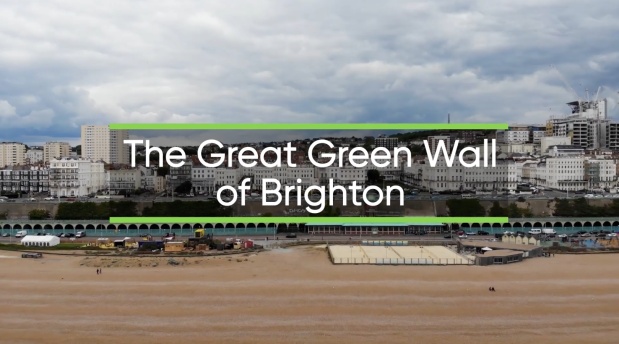
Made by LatestTV with James Farrell from Brighton & Hove Building Green and The Human Nature Partnership, the film ‘The Great Green Wall of Brighton’ celebrates the role nature plays in the health and wellbeing of towns and cities, and focuses on some of the special features of Brighton & Hove.
First, the health-giving properties of the sea – including the tradition of sea bathing established in the town.
Second, the ‘green wall’ on the eastern seafront in Brighton that was planted by the Victorians 150 years ago this year. The green wall is a unique and influential example of integrating architecture and planting for the benefit of people and wildlife, pre-dates Madeira Terrace, and is the longest and oldest green wall in Europe.
James interviews a range of national and local experts, and the film includes stunning new footage from Latest filmmaker William Ranieri alongside historic images.
“People in Brighton and Hove have opportunities to be close to nature which are the envy of many other cities. The seaside, downs and urban green spaces all boost our happiness and wellbeing – and provide places for wildlife to thrive. This film tells this story – from sea bathing in the 1700s, to Victorian innovation in urban design – and shines a light on the very unique and special ‘green wall’ we have on the eastern seafront.”
James Farrell, Brighton & Hove Building Green
“We are really pleased to have been producers of this film and to be premiering it! I have been on the community advisory group for Madeira Terraces for a year or so and know how important the Green Wall is to Brighton. James Farrell tells the story beautifully.”
Latest TV Director Bill Smith
Screening
The film can be seen on LatestTV studio at 13-17 Manchester St, Brighton, on Sunday the 15th January at 3 PM RSVP for tickets to the premiere by contacting LatestTV.
Biography
James Farrell is Founder of Brighton & Hove Building Green, a community network which has been instrumental in protecting and managing Madeira Drive Green Wall, and raising the profile of green infrastructure in the city.
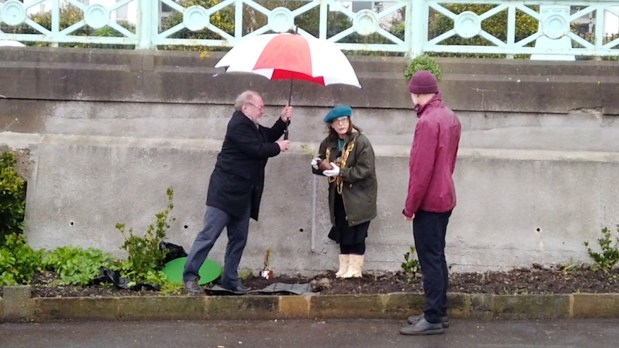
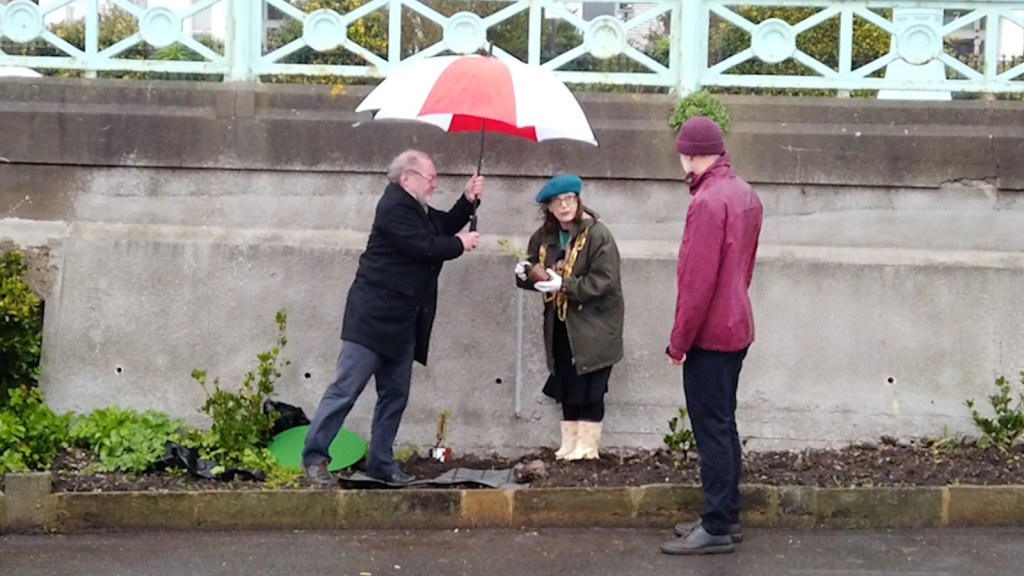
Today Mayor Cllr Lizzie Dean planted two baby Japanese spindle trees, in celebration of 150 years of the Madeira Drive Green Wall.
The Mayor braved torrential rain to plant the trees, and also unveil a ‘Green Plaque’ awarded to the site by Brighton & Hove Building Green. In attendance was Portslade Green Gym representative Sue Stubbings, and Biodiversity Officer Kim Dawson.
The Mayor said:
“I am delighted to be here today to celebrate the 150th anniversary of the Madeira Drive Green Wall.
Thanks to Victorian visionaries including the Council surveyor Phillip Causton Lockwood, Brighton & Hove is home to not only the longest, oldest green wall in Europe – but also the longest continuous ironwork structure in the world, Madeira Terrace.
I would like to thank the volunteers from Brighton & Hove Building Green who have worked for years towards this achievement – as well as the volunteers from Portslade Green Gym and the local East Brighton community who regularly tend the plants here.”
The full speech follows.
Thanks to Victorian visionaries including the Council surveyor Phillip Causton Lockwood, Brighton & Hove is home to not only the longest, oldest green wall in Europe – but also the longest continuous ironwork structure in the world, Madeira Terrace.
The green wall was planted in 1872, and predates the Terrace. It was established along with hedges and other plants, to make the new seafront an attractive place to walk, take the sea air, and enjoy the views.
Work is shortly to begin to restore and revive the Terrace, and these ambitions remain as relevant now as they did then.
Brighton’s seafront is world famous, and attracts millions of visitors, and provides a vibrant space for local people and businesses. But it is hard to imagine what it would look like without this magnificent green wall.
There are over 100 types of flowering plants along the green wall, as well as birds such as goldfinches, wrens and sparrows, and butterflies like red admirals and holly blues. In recognition of its wildlife value, the Council has designated Madeira Drive Green Wall a Local Wildlife Site – the first of its kind in the country.
I would like to thank the volunteers from Brighton & Hove Building Green who have worked for years towards this achievement – as well as the volunteers from Portslade Green Gym and the local East Brighton community who regularly tend the plants here.
I would like to encourage more people to come and take in the nature that can be found on our seaside. It is a wonderful resource which can help us feel calmer and happier.
In time, the Council plans to restore the green wall to its original full length, and open the Terraces again for events and recreation.
As a small step in that plan, I am honoured to be planting this small Japanese spindle tree – a cutting from its 150 year old parents.
A milestone was reached yesterday – permission to begin the first phase of restoration of Madeira Terrace.
The Terrace has been closed for 10 years. Building Green has been working on the protection of the Green Wall behind the Terrace since 2008. Getting planning permission has been a huge amount of work by a lot of people. Not easy, not always popular, but we can now move on to making things happen on the ground!
The restoration of the terrace, which has been an iconic part of Brighton’s seafront since the 1890s, will be undertaken in phases. Phase 1 consists of the 40 arches between the Royal Crescent Steps in the west and Shelter Hall – the Concorde 2 venue – in the east.
Building Green is particularly proud of securing improvements to the natural environment along Madeira Drive as part of this work – and how they will be integrated into the heritage and built architecture of the seafront. Truly nature at the heart of a community.
Local interest groups and experts, including local Green Wall support group, Building Green, have helped advise on the best methods to protect, transplant and re-populate the wall. A key consideration has been ensuring the longevity of the concrete-faced East Cliff, which supports the deck – without which there would be no green wall. Certain species found in the original surveys, such as sycamore, would destroy the wall over time so cannot be retained. The 40 arches in Phase 1 are in front of the most flourishing section of the Green Wall currently. The biggest gains in biodiversity will come in subsequent phases of the restoration covering the remaining 111 arches.
Now let’s get behind everyone involved, and see our vision come to life!







 Brighton & Hove Building Green